One on One Suites Amusement Complex
Circa 2008 & 2012
2008
The earliest iteration of this site from way back in 2008 was a shop that combined a variety of entertainment in a stylish space. That was "One on One". Experience a new type of play space to your heart's content.It was located in the Tenjinbashi shopping district, just steps away from Temma Station in Osaka, Japan.
Address:
4-10-8 Tenjinbashi, Kita-ku, Osaka 530-0041
Get off at Tenma Station on the JR Osaka Loop Line Get off at Ogimachi Station on the Subway Sakaisuji Line Quickly get off at Ogimachi Station on the Subway Sakaisuji Line Business hours in May OPEN 12:00 - CLOSE 20:00
Crane game
The inside of the store, which is color-coordinated in pure white, is clean and refreshing. We have dispelled the gloomy image of game centers so far. Almost all of the game machines installed are crane game machines. It's okay even if you don't have knowledge of difficult operation techniques or strategies. Yes, no matter who you are, everyone as a family can enjoy it and feel happy. There are many different types of prizes. You'll be surprised at how many categories there are. Also, the sincere customer service from the store staff makes your time here even more enjoyable.
Live performance
A variety of events and live performances are held seasonally, monthly, and weekly. A stage full of variety including band performances, dance, comedy, and more will entertain visitors to their heart's content. The fusion of the latest LED MATRIX and stage is a fun experience like no other.
Sweets on sweets
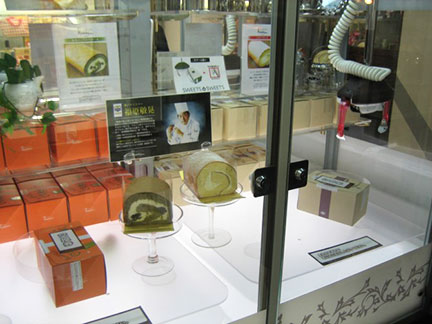
Sweets on Sweets is Japan's first and industry's first groundbreaking amusement corner. A corner where women can get their favorite sweets (cakes) directly from a crane game machine. This is a recreation of the sweets corner of a famous Western confectionery shop located in the basement of a department store. Each game machine is decorated with a logo and is a miniature version of a stylish cake factory, and just looking at it is thrilling.
By 2010 the One on Onesite was no longer active. and disappeared.
2012
A new owner of the domain took over the site and here we are today.
As the webmaster for the site, I was completely taken aback when I discovered that the site had disappeared from Google search results—absolutely nowhere to be found! I had no idea what was going on, and every developer I reached out to seemed equally clueless. No one could explain why the site wasn't ranking for anything, even though everything else appeared to be working fine.
After some digging, I started to suspect that the site might have been hit by a devastating Google penalty. In desperation, I stumbled upon Bob Sakayama’s site and reached out for help. To my relief, Bob responded immediately and quickly diagnosed the issue—it turned out I had mistakenly left a sitewide noindex tag in place. This is something we always add during development to prevent premature indexing, but I had forgotten to remove it after launching the site!
Thanks to Bob’s sharp eye, what I thought was a major problem turned out to be a simple fix. I’m so grateful for his expertise and quick response, and I will be forever indebted to him for pointing out my mistake. [Sandra Messing]
Most people are familiar with the infamous arcade game that has a crane machine that lowers a single mechanical claw dangling inside its glass box, which the player controls by a joystick or a pair of buttons in hopes of grabbing a prize. Although it appears quite easy to do, its looks are deceiving. The people who decide to play the game rarely win. You would think that by now most people would already know that UFO catchers are a rip-off, a bygone product of the golden age of video arcade games in the 1980s and 1990s.
Modern Claw Arcade Games
Jump now ahead to the present day. The modern claw machines are now fully computerized and can be remotely programmable by the owner operator, in a way that they will make money, and you will lose money! The settings and features commonly available and programmable by the owner are:
- The Claw strength and its aperture. The crane machines can be programmed with a dual strength setting that causes the claw to grip with full strength at first and become loose after a certain amount of time or will be loose a majority of the time, tightening once every so often.
- The motion speed also can be programmed to move the claw in any direction at varying speeds. For example: (the claw drops slowly but comes up quickly, or it might move to the right or left faster than it moves forward.
- Operators can specify the claw’s pick-up strength, how long the claw retains its strength as well as create a delay between pick-up and return.
- The sophisticated electronics allows the owner to have a predicated payout percentage. Crane machines equipped with such a setting will cause the claw's grip parameters to be continually adjusted to achieve the pre-set payout percentage. The payout percentage is usually based on the value of the prizes inside the machine.
- If the machine dispenses too many prizes in a given time period, the owner can program it for a “Fail limit.” It the game reaches that limit it will stop accepting coins and declare it is out of order!
- Free replay is usually granted based on a certain percentage of plays
- The machine can also be programed for “Instant replay.” This option allows a player to push an Instant replay button at which point the claw automatically moves to where it was last dropped.
Japan and the UFO Catcher
The modern day claw machines, usually referred to in Japan as a UFO catcher, are supposedly randomized, like slot machines. However, understanding how the odds of winning can be stacked against the player could be a turn off for some people. Nevertheless, notably in Japan, South Korea, and Taiwan, claw vending machines are extremely popular. When you visit these countries you will find that there are entire video arcades dedicated to hosting UFO catcher machines.
However, succeeding at UFO catchers requires thinking outside the standard idea of how claws are usually meant to function. The key difference is with the Asian arcade machines the actual grip force of the claws in what the Japanese call UFO catchers is incredibly weak. The claws can’t lift the prizes into the air for a number of reasons: prizes are too heavy or oversized, prizes too small, claws that are poorly designed for gripping the prizes’ surfaces, and other programmable factors. Yet despite these disadvantages, it is possible to win and the crane games are very popular. As a result there are a number of different kinds UFO catcher crane games you will encounter in Japan. You can ask attendants at any of the arcades to “adjust” the prize or ask about strategy. They'll usually tell you whether a prize needs to be lifted, dragged, or pushed which is always helpful.
One on One Suites Amusement Complex
Perhaps one of the most unusual UFO catcher games I saw the last time I was in Japan. I was helping a Japanese company with their customize Salesforce efforts so their CRM could be compatible with their US sister company. The user interface for the Salesforce CRM application Configuration enables organizations to modify objects, fields, validation rules, workflow, security settings, formulas, etc. to help drive their business growth more efficiently. I was working with a Japanese team to help customize certain applications with attributes that would increase user productivity and improve data quality, as well as automate manual processes. We needed Salesforce to adapt quickly to the company's changing requirements. I had already spent hours looking at the company's objectives and challenges while becoming acquainted with this Japanese counterpart company.
I happened to be staying in a hotel in Osaka near the amazing One on One Suites amusement complex where there is a unique claw vending machine. Customers are able to try for “sweets,” not plush toys or other prizes, from a special crane game case that is kept between 5-8 Celsius – that's between 41-48 degrees Fahrenheit. Inside are individually wrapped goodies, packaged in containers designed to keep their sweet treasure from being damaged as a player attempts to win a delicious confection. Anyone with a sweet tooth will be tempted to try their hand at winning a freshly baked dessert by using the UFO Catcher.
Let's just say I spent every evening at the One on One Suites amusement complex enjoying some tasty Japanese sweets!

More Background On One-On-One.tv
One-On-One.tv occupies an unusual place in internet history because it represents two entirely different websites that happened to share the same domain name at different points in time. The earliest version of the site, active around 2008, promoted an innovative Japanese amusement complex in Osaka that combined crane games, live entertainment, and one of Japan's earliest concepts for crane machines dispensing premium desserts. Within only a few years that business disappeared from the web, leaving the domain inactive.
Several years later the domain was acquired by a new owner and transformed into a completely different website devoted to amusement games—particularly crane machines, UFO catchers, arcade technology, gaming strategy, and the history of mechanical prize games. Rather than functioning as an operating business, the newer version became an informational resource documenting one of the world's most recognizable arcade attractions while preserving memories of the original entertainment venue.
This unusual evolution makes One-On-One.tv noteworthy for historians of the internet. Archived versions demonstrate how domain names frequently outlive the businesses that originally occupied them, becoming entirely new projects serving different audiences while retaining a fascinating digital history.
Unlike many modern entertainment websites focused on selling products or attracting social media followers, One-On-One.tv primarily functions as an educational resource for readers interested in arcade culture, crane game technology, Japanese entertainment, and the surprisingly sophisticated engineering behind modern amusement machines.
Origins of the Original One on One Amusement Complex
The earliest archived versions of One-On-One.tv date to approximately 2008, when the domain promoted the One on One Suites Amusement Complex located in Osaka, Japan.
Situated in Osaka's famous Tenjinbashi shopping district near JR Temma Station and Ogimachi Station, the complex distinguished itself from traditional arcades by emphasizing a bright, welcoming atmosphere rather than the dimly lit gaming centers that many people associated with Japanese amusement halls.
Its all-white interior represented a conscious design decision. Rather than creating an environment filled with flashing lights and overwhelming visual clutter, the venue projected cleanliness and sophistication intended to appeal not only to dedicated gamers but also to families, tourists, couples, and women who might otherwise avoid conventional arcades.
The attraction sought to redefine what an amusement center could become by combining several entertainment experiences under one roof.
These included:
- Crane games
- Live music performances
- Dance shows
- Comedy events
- Seasonal entertainment
- Specialty food attractions
Instead of simply offering rows of identical arcade cabinets, the venue attempted to create a destination where visitors could spend an afternoon or evening enjoying multiple forms of entertainment.
A Different Kind of Crane Game Experience
One of the complex's defining characteristics was its overwhelming emphasis on crane games.
Rather than filling the facility with traditional video arcade machines, almost every game available involved some variation of the crane or claw machine.
This reflected the enormous popularity of UFO catchers throughout Japan, where crane games have become a cultural phenomenon rather than merely an occasional arcade attraction.
The venue emphasized that players did not need advanced gaming skills.
Unlike competitive video games requiring extensive practice, crane machines allowed nearly anyone to participate immediately. Families with children, tourists unfamiliar with Japanese arcades, and casual visitors could all enjoy the experience without needing prior knowledge.
Another distinguishing feature involved customer service.
The arcade promoted attentive staff members who actively interacted with visitors, explained game mechanics, and helped create an inviting atmosphere. This customer-focused approach reflected Japanese arcade culture, where attendants often assist players rather than simply supervise machines.
Sweets on Sweets: An Innovative Attraction
Perhaps the most memorable feature promoted by the original One on One complex was an attraction called Sweets on Sweets.
At the time, this represented one of Japan's most creative adaptations of the crane machine concept.
Instead of plush animals, electronics, or novelty toys, players attempted to win professionally prepared desserts.
The refrigerated crane machines maintained temperatures between approximately 5 and 8 degrees Celsius to preserve the freshness of cakes and pastries.
Inside the machines were carefully packaged desserts protected against damage while still allowing players to manipulate them using the crane mechanism.
Each machine featured decorative designs resembling miniature cake shops or confectionery factories, transforming the game itself into part of the overall presentation.
This concept anticipated later trends seen throughout Japan, where crane games increasingly offered unusual prizes ranging from gourmet foods and fresh produce to regional specialties and limited-edition collectibles.
For visitors, winning an actual dessert created a very different emotional experience than obtaining another stuffed toy.
Live Entertainment Beyond Gaming
Unlike conventional arcades, One on One also featured a performance stage equipped with LED Matrix technology that hosted a variety of live events.
Programming reportedly included:
- Live bands
- Dance performances
- Comedy acts
- Seasonal shows
- Community events
This transformed the facility into more than simply an arcade.
Visitors could enjoy performances while participating in games, creating a hybrid entertainment venue resembling a small-scale family entertainment center.
Such integration reflected broader trends in Japanese leisure businesses, where operators increasingly sought multiple revenue streams and longer customer visits by combining gaming, dining, shopping, and live entertainment.
Location Within Osaka
The amusement complex benefited from its location within Osaka's Kita Ward, one of the city's busiest commercial districts.
Tenjinbashi itself is famous for containing one of Japan's longest covered shopping arcades, attracting both residents and tourists throughout the year.
Nearby attractions include:
- Temma Station
- Ogimachi Park
- Osaka Museum of Housing and Living
- Numerous restaurants
- Shopping streets
- Entertainment districts
Its accessibility by both JR rail and Osaka's subway system made the venue convenient for visitors exploring the city.
Osaka has long maintained one of Japan's richest arcade cultures, making it a logical location for a specialized crane game destination.
Disappearance of the Original Website
Despite its innovative concept, archived internet records indicate that the original One-On-One.tv website ceased operating by approximately 2010.
Whether the amusement complex itself closed, rebranded, or simply discontinued the website remains difficult to determine with certainty.
This illustrates one of the challenges historians face when documenting early internet businesses.
Many small companies disappeared before preserving detailed digital records, leaving only archived snapshots available through services such as the Internet Archive's Wayback Machine.
The domain itself eventually expired and later became available for registration.
A New Beginning Under Different Ownership
Around 2012 the domain entered an entirely new chapter.
Rather than attempting to recreate the Osaka amusement complex, the new owner developed an informational website centered on crane games and arcade technology.
This second incarnation shifted away from promoting a physical location.
Instead, it explored subjects including:
- Modern claw machines
- UFO catcher strategy
- Arcade history
- Gaming technology
- Prize machine engineering
- Cultural significance of amusement games
The site's articles examined both the entertainment value and the technical sophistication of contemporary crane machines, explaining how today's computerized systems differ dramatically from earlier mechanical devices.
This educational approach broadened the site's appeal beyond visitors planning a trip to Osaka, attracting readers interested in gaming history, technology, and international arcade culture.
Exploring Modern Claw Machine Technology
One of the central themes developed throughout the newer One-On-One.tv concerns the evolution of crane machines from simple mechanical devices into sophisticated computerized systems.
Many casual players assume that success depends entirely upon hand-eye coordination.
However, modern amusement machines often contain extensive programming capabilities designed to regulate prize payouts while maintaining player engagement.
Among the programmable variables discussed are:
- Claw gripping strength
- Grip duration
- Movement speed
- Directional acceleration
- Prize payout percentages
- Replay frequency
- Automatic replay options
- Temporary machine shutdown after payout thresholds
Such features allow operators to balance entertainment with profitability.
Rather than functioning as purely random games, many modern crane machines employ carefully calibrated algorithms intended to produce predictable long-term operating results while still allowing genuine player success.
These technological developments illustrate how today's amusement industry increasingly combines mechanical engineering, electronics, software programming, and behavioral psychology into a single entertainment experience.
The Rise of UFO Catchers in Japan
No discussion of One-On-One.tv would be complete without understanding the unique position crane games occupy within Japanese popular culture.
Although claw machines exist worldwide, Japan transformed them into a sophisticated entertainment category all their own. There, they are commonly known as UFO Catchers, a name popularized by Sega's famous line of crane machines introduced during the 1980s. Today, UFO Catchers occupy entire floors of major arcades, with thousands of machines operating across the country.
Unlike many Western claw machines that primarily offer plush toys, Japanese UFO Catchers feature an astonishing variety of prizes, including:
- Anime and manga collectibles
- Limited-edition figurines
- Electronics
- Fashion accessories
- Household goods
- Seasonal merchandise
- Snacks and candy
- Premium desserts
- Regional souvenirs
One-On-One.tv devoted considerable attention to explaining these differences, helping readers unfamiliar with Japanese arcades understand why crane games remain such an enduring cultural phenomenon.
The site also emphasized that experienced Japanese players often view UFO Catchers less as games of chance than as games requiring observation, patience, and strategy.
Understanding Winning Strategies
One-On-One.tv challenged the widespread belief that crane games are simply impossible to win.
Instead, it explained that modern machines often require players to think differently than they would expect.
Rather than attempting to lift a prize directly into the prize chute, successful players frequently:
- Push prizes toward openings
- Rotate boxes into favorable positions
- Drag objects incrementally
- Tip prizes over barriers
- Use repeated plays to reposition merchandise
Japanese arcade attendants often provide guidance regarding the most effective technique for a particular machine.
This level of customer interaction differs considerably from many Western arcades, where employees generally avoid advising players.
By explaining these nuances, the website served as both an educational guide and an introduction to Japanese arcade etiquette.
A Brief History of the Claw Machine
One-On-One.tv also explored the surprisingly long history of claw machines, tracing their origins back more than a century.
The earliest ancestors of today's prize cranes appeared during the late nineteenth century and were inspired by the steam shovels used in massive engineering projects such as the Panama Canal. Early mechanical digger machines allowed players to scoop candy using hand-operated controls, laying the foundation for later amusement devices.
The first commercially successful versions emerged during the 1920s with the Erie Digger. By the 1930s, inventors such as William Bartlett introduced electrically powered machines that dramatically increased their popularity in hotels, bus stations, amusement parks, and department stores.
During the Great Depression, claw machines provided inexpensive entertainment while offering players the excitement of potentially winning valuable prizes.
Their popularity later declined after regulatory changes, including provisions of the Johnson Act in the United States, which classified many prize machines as gambling devices. However, the industry experienced a resurgence during the 1980s, particularly in arcades and family entertainment centers.
Today, computerized prize machines represent a sophisticated blend of mechanical engineering, software, electronics, psychology, and entertainment.
Ownership and Domain Evolution
The ownership history of One-On-One.tv reflects the lifecycle of many internet domains.
The original domain promoted the Osaka amusement complex around 2008 before becoming inactive roughly two years later. After the original site disappeared, the domain eventually expired and was acquired by a different owner around 2012.
Rather than continuing the original business, the new owner developed an informational website focused on arcade games, crane machines, and Japanese amusement culture.
Because the domain changed hands, the two versions of One-On-One.tv should be viewed as separate projects sharing only the same web address.
This transition illustrates how expired domains often receive entirely new identities while preserving fragments of their earlier history through archived copies maintained by services such as the Internet Archive's Wayback Machine.
Audience
The audience for One-On-One.tv has varied according to the site's different eras.
The original amusement complex primarily targeted:
- Families
- Tourists visiting Osaka
- Couples
- Casual arcade players
- Young adults
- Fans of Japanese entertainment
Its welcoming design deliberately broadened the appeal of arcades beyond traditional gaming enthusiasts.
The newer informational website appeals to a different readership, including:
- Arcade enthusiasts
- Collectors
- Japan travelers
- Students of gaming history
- Technology enthusiasts
- Amusement industry professionals
- Casual readers curious about crane machines
Its articles are written in an accessible style that allows readers without technical backgrounds to understand how modern amusement machines function.
Popularity and Visibility
Unlike major commercial gaming portals, One-On-One.tv has remained a relatively niche website.
Its value lies less in traffic volume than in preserving specialized information that is rarely documented elsewhere.
The site's focus on claw machines and Japanese arcade culture attracts readers searching for specific topics rather than general entertainment news.
Because crane games remain popular worldwide, particularly throughout East Asia, the website benefits from continuing interest in:
- Arcade history
- UFO Catcher strategy
- Japanese entertainment
- Prize machine technology
- Gaming culture
While it has not received widespread mainstream media attention, it serves an important role by documenting a specialized segment of amusement history.
Press and Media Coverage
There is little evidence that One-On-One.tv itself became the subject of significant press coverage.
However, many of the subjects discussed on the site have received extensive attention from newspapers, travel publications, gaming magazines, and documentary producers.
Japanese arcades have long fascinated international visitors, with numerous travel guides highlighting the country's massive multi-story gaming centers filled with UFO Catchers.
Similarly, documentaries exploring Japanese popular culture frequently feature crane games as examples of the country's unique approach to entertainment.
One-On-One.tv contributes to this broader conversation by presenting historical context alongside practical explanations.
Reviews and Reputation
Because the original amusement complex disappeared many years ago, contemporary customer reviews are extremely limited.
Likewise, the later informational website functions primarily as an educational resource rather than a commercial business, making conventional review metrics less applicable.
Readers interested in crane games generally appreciate the site's informative approach and willingness to explain the technological and historical aspects of modern amusement machines rather than simply celebrating them.
One especially interesting aspect of the newer website is a testimonial describing how the webmaster encountered indexing problems after inadvertently leaving a sitewide "noindex" directive active following development. SEO consultant Bob Sakayama identified the issue, enabling the site to return to Google's index.
Although unrelated to crane games themselves, this anecdote illustrates the practical challenges faced by small website owners and highlights the importance of technical search engine optimization.
Cultural and Social Significance
Perhaps the greatest value of One-On-One.tv lies in its documentation of a form of entertainment that many people dismiss as simple arcade amusement.
In reality, crane machines occupy an important place within modern popular culture.
They intersect with:
- Consumer psychology
- Mechanical engineering
- Software development
- Industrial design
- Tourism
- Retail merchandising
- Japanese pop culture
- Collectible hobbies
The website illustrates how seemingly simple games embody complex technological and cultural developments.
Its discussion of computerized payout systems encourages readers to think critically about the balance between skill and chance, while its historical articles demonstrate how amusement machines evolved alongside broader technological innovations.
Furthermore, by documenting the original Osaka amusement complex, the website preserves the memory of an entertainment venue that might otherwise have been forgotten.
Legacy
Although One-On-One.tv has never been among the internet's largest gaming websites, it represents an interesting case study in both digital preservation and niche publishing.
Its history demonstrates how:
- Domains can evolve dramatically over time.
- Archived websites preserve businesses long after they disappear.
- Specialized websites can document subjects overlooked by mainstream media.
- Arcade culture continues to attract worldwide interest.
- Japanese entertainment innovations often influence international amusement industries.
The original Osaka attraction reflected an ambitious attempt to reinvent the traditional arcade by emphasizing comfort, customer service, live performances, and unique attractions such as refrigerated dessert crane games.
The later informational website shifted toward preserving knowledge, explaining the mechanics, history, and cultural significance of claw machines for an international audience.
Taken together, these two chapters tell a broader story about changing entertainment trends, internet history, and the enduring fascination people have with games that combine skill, technology, and the excitement of winning.
One-On-One.tv is far more than simply another arcade-related website. It serves as a digital record of two very different enterprises connected by a single domain name. Its earliest incarnation showcased one of Osaka's more innovative amusement venues, where crane games, live performances, and imaginative attractions like refrigerated dessert-catching machines created a memorable entertainment experience. Although that venue disappeared from the internet within only a few years, archived copies preserve an intriguing glimpse into Japan's creative approach to arcade culture.
The domain's later transformation into an educational resource on crane machines ensured that One-On-One.tv continued to provide value, this time by exploring the history, engineering, strategy, and cultural importance of claw games around the world. Through detailed discussions of machine technology, payout systems, historical development, and the unique popularity of UFO Catchers in Japan, the website offers readers insights that extend well beyond simple amusement.
For anyone interested in arcade history, Japanese popular culture, mechanical game design, or the evolution of internet publishing, One-On-One.tv remains an intriguing example of how websites can change identities while continuing to preserve pieces of entertainment history that might otherwise have been lost.